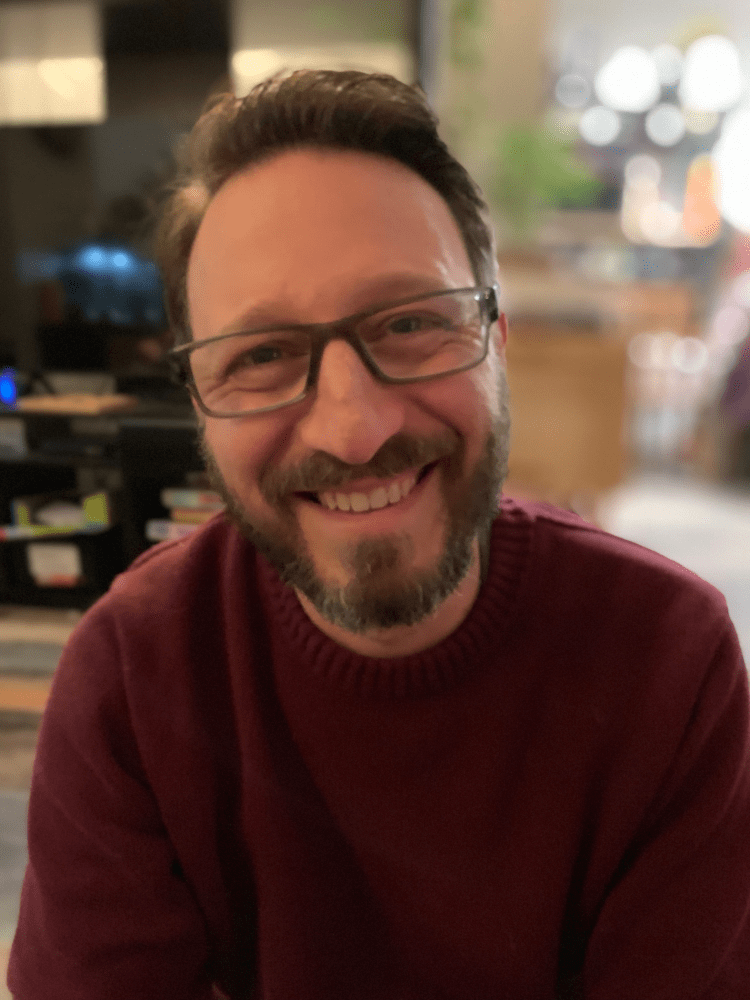
Chris Pearce is an animator and filmmaker also working as a professor at the University of Colorado-Boulder in the film studies department. Pearce started by pursuing a BFA in film production from CU Boulder followed by an MFA in electronic inter-media from the University of Florida. Today, he teaches courses with a focus on animation and digital production.
One of my initial questions about a career in film, like Pearce’s, is how someone finds their interest in that field. From my experience, almost everyone interested in film and filmmaking became interested in it in a different way. Interestingly, Pearce cites his love of magic as the origin of his love of filmmaking. “My interest in animation grew from my interest in magic and illusion more than from an appreciation for film. I have always very much enjoyed cartoons but my decision to start making animation was born from my confidence and understanding of the tools and techniques of the illusion of cinema, rather than from an interest in narrative, story, or theater.”
As an independent filmmaker, Pearce has worked on both large and small projects. Some of which are animation works like his short film The Archive of the Movements of Inanimate Objects. His films Leaf and Flight Video explore a more experimental side while using a variety of techniques. Pearce has recently been working on smaller independent projects in addition to his current position as a university instructor.
Pearce identified one of the most important things to keep in mind as a filmmaker is your relationship to failure and yourself as a creative.
“Every project you make while you’re learning will feel like failure,” said Pearce.
Filmmaking is a creative field that requires one to be in touch with themselves as a creative and their relationship to their work. One of the things that I think many aspiring creatives struggle with is staying motivated as well as fears around the quality of their work. Pearce offered some guidance on this by offering his own experience and perspective on such feelings. “I started with confidence in my own creativity. Like everyone, I have limited talent, but, like everyone, I also have the capacity to learn. So I started from my talent and allowed myself to grow as much as I could while I practiced. My first films are not good, but they are single simple ideas that were achievable, so they were completed. Making achievable goals is important so that each project will have, minimally, some sense of success when they are completed.”
Current college students majoring in film or aspiring filmmakers may fear how they will pursue this on a professional level. Film and production is an industry that is made up of many different careers and how those careers are defined can differ greatly. It could be argued that film is one of the less pursued fields. For example, film tends to be a relatively unpopular major for college students while business and health professions rank among the most popular college majors. Some of the jobs that people looking to work in the film industry often go into entry-level production positions working as a production assistant with hopes of working their way up to more important positions.
“You can’t be too picky. You need to find what’s right for you by trial and error. If you want to be a [director of photography], you may have to work as a second [assistant camera], or a first [assistant camera] for a while first. And then you might learn that you’re a better production designer than a camera operator. Moving up in the film industry means a whole staircase of proving your abilities one step at a time. There will always be jobs in cinema for people with confidence in their ability to learn tools and techniques.” With this statement, Pearce offers some guidance for those struggling in their path to becoming a successful filmmaker.
Pearce also identifies some important characteristics that a successful filmmaker should have. “The most important skill to working in film is the ability to work well as part of a team and to see the collaborative goal as more important than your individual goal.”
Pearce is unique in that he is both a filmmaker himself and teaches others how to become better filmmakers themselves. Pearce states that one of the things he enjoys about being an educator is that he has a love for the material he teaches as well as the practice of teaching. “I’m a natural teacher in some ways. That happens to be one of my talents. I like students, I like filmmaking, and I care about people’s learning.”
“As an independent filmmaker, I am always following my own enthusiasm for the medium. My work is personal in that way. As an instructor I am thoughtful, enthusiastic about filmmaking, demanding of rigor in making, and focused on the practical side of filmmaking. Not simply thinking or talking about work, but laboring and completing it.”
 The MFJS Reporter -- Winter 2020 T-R