IGNITE works to share internship positions in the political field, establish meaningful connections and networks, and educate others on what they can do to make real, positive change through events and panels such as this one.
DU IGNITE is run by a team of hardworking students, its President being senior, Maya Anthony. Anthony began the event explaining some of the projects IGNITE has worked on recently and introduced Bray.
“Last week we had a council [where we met with other chapters] and we lobbied on a bill for a menstrual product grant for public schools,” said Anthony.
Bray began her professional career as a clinical psychologist and became interested in the environment and governmental action while living in Australia. Upon her return to Colorado, she learned that we have earned an F rating by the American Lung Association.
Bray said, “Why am I looking around to see who is going to fix this thing? If we want to make change, we have to be the ones that actually engage. Right now, there’s not enough representation in the US Senate regarding climate.”
After this recognition, Bray decided to run for the US Senate seat. There has yet to be a female, US Senator from Colorado. Bray hopes to be the first.
Bray is advocating for climate justice and a single pay or Medicare for all system. Being that she is a clinical psychologist, she is deeply interested in mental and public health.
Bray said, “Medical care and health care share an interesting and important connection with the climate.”
Bray also spoke on the challenges that she has faced as a woman in politics.
“Women in politics do not have the same networks as the men, fundraising is much tougher. Some people believe that white male politicians are safer—that is something that we have to contend with all of the time. [Females] are the ones interested in making systemic change. Until we do that, we can’t accomplish [the goals and policy change that we’ve been discussing,” said Bray.
IGNITE began the conversation with a planned questionnaire, and later opened the questions up to the audience present. These questions focused even more on climate advocacy and environmental racism.
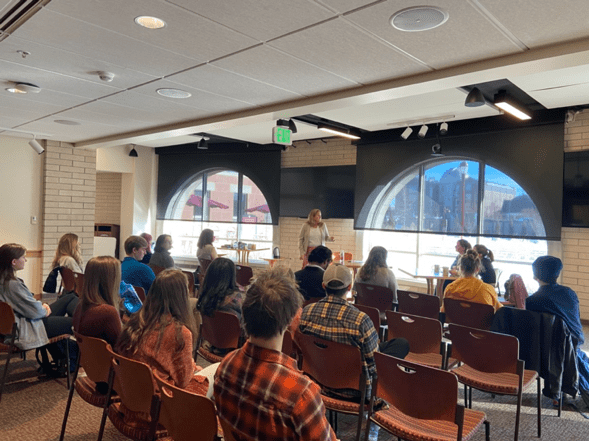
Bray said, “We have to include the communities that are most impacted in the conversation and elect people from those communities. If these folks are involved, then they can make a difference to the laws that impact them most.”
Bray took the time to learn about the interests of the audience, especially relating to climate and political action.
Bray ended the conversation, “We have to elect people who are interested in defending people, not corporations.”
 The MFJS Reporter -- Winter 2020 T-R
I really enjoyed the part about how women are looked upon differently when it comes to fundraising. That is a tough stereotype. I wonder if there is a way in which to combat this issue. good article.
LikeLike