Sarama has also conducted a large amount of significant research pertaining to the early education field. She utilizes learning trajectories and specific types of assessments to analyze the progress of learning mathematics in preschool and elementary level classrooms.
On Tuesday, February 18th, Sarama spoke to the DU community about what strategies work and what strategies should be omitted when implementing learning trajectories. Although the room was only about half full, the audience seemed pleased due to the abundance of food and beverages offered at the event free of cost.
The main topic of the speech concerned implementation of learning trajectories in contrast to regular school curriculum and lesson plans. Sarama said “Learning trajectories have three parts. They have a goal, developmental progression, and instructional activities to get there.”
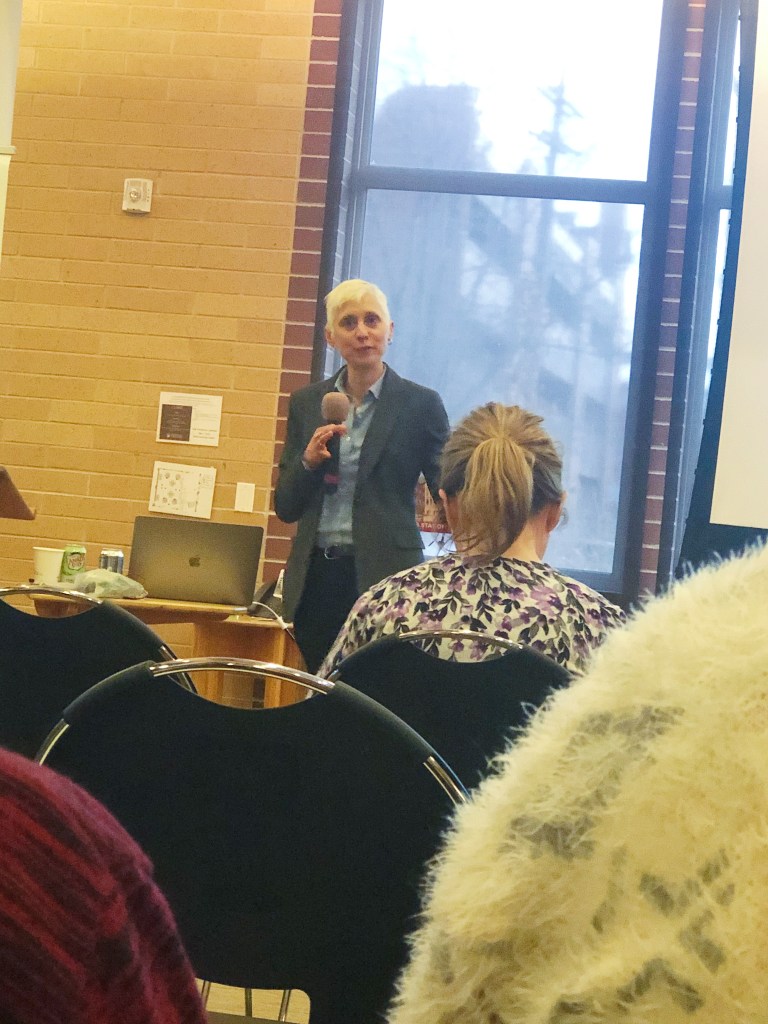
Sarama said “The number one question in math is not a question. Kids raise their hand and say ‘I don’t get it.”
The aim of learning trajectories is to make it easier for teachers and students to specifically identify what it is that they do not understand. Then, they are given specific activities which help them move forward.
Sarama has done a significant amount of work and research in early education and mathematics. She said that early education and math are a crucial point in development. She mentioned that students’ early understanding of math is predictive of how they think and make sense of math later in their lives. In addition, these early math skills will later help them with logistical thinking and critical problem solving skills.
Sarama also found that these trajectories worked across various types of classrooms, including amongst children with learning or developmental disabilities.
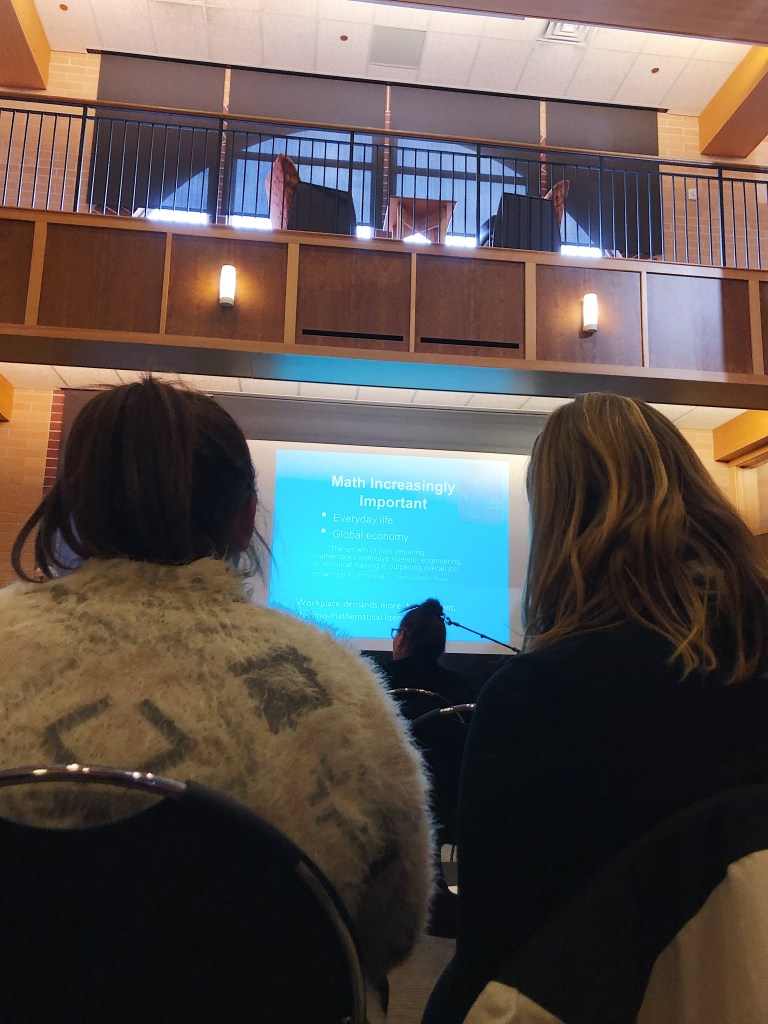
Another obstacle that Sarama mentioned which many students face with mathematics is feeling like they’re just naturally unable to understand the material. However, if children shift their way of thinking about math through activities and support provided by a strong learning trajectory, their math skills can improve significantly.
Sarama said “Each level (of learning trajectories) builds hierarchically and there is a new emergence of a new way of thinking, but you can fall back on your previous way of learning for complex problems”
Sarama emphasized throughout the speech that learning trajectories are meant to help students learn concepts in new ways. However, regular unit-based math curriculums often focus on simply memorizing, understanding, and then regurgitating the information without building new critical thinking skills.
Although the audience at this event was mainly education professionals, the information shared by Sarama is incredibly useful for anyone who works with or has small children. Sarama encouraged listeners to provoke new ways of thinking and curiosity among young math students. In conclusion, she emphasized that no concept is unteachable and no student is incapable of learning and understanding mathematics.
 The MFJS Reporter -- Winter 2020 T-R
A really important lecture that highlights the important of early education especially in mathematics. Math is an incredibly valuable tool in basic skill sets, especially later on in professional life. Preschools definitely need to incorporate numbers into their systems more, the way Building Blocks has!
LikeLike